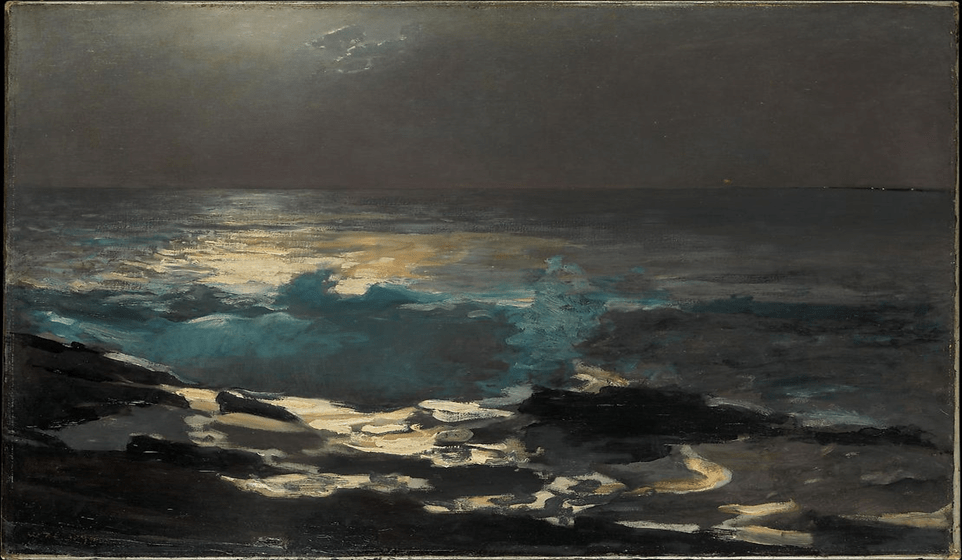
I want to hold you, long and close, where waves break in twilight.
I want to hold you, long and close, and feel your skin gleaming with joy.
I want to hold you, long and close, in the tiered fragments of a vision.
I want to hold you, long and close, whenever you come back to me
on the froth of the tide.
Gasp
I did not expect to find you here, among these little shells and things skittering from shore to shore in a vast eternity of sea-foam; but here you are, light years from when I met you, seeing the sea with eyes still open to astonishment.
I did not expect to see you, with your face lit up in eager joy, or feel the fading day being charged again by a sudden voltage of your touch; but here you are, as the night undresses in an alcove of dreams and moonbeams, uttering the long tidal gasp of a longing echoed from every shore.
Martin McCarthy lives in Cork City, Ireland, where he studied English at UCC. He has published two collections: Lockdown Diary (2020) and Lockdown (2021). His most recent poems appear in the pandemic anthology, Poems from My 5k, and in the journals: Drawn to the Light, Seventh Quarry Poetry, Poetry Salzburg, The Lyric, The Road Not Taken, The Orchards, WestWard Quarterly, Better Than Starbucks, Blue Unicorn, and Lighten Up Online. He was shortlisted for the Red Line Poetry Prize, and is a nominee for the 2022 Pushcart prize. At present, he is working on a long sequence of love poems, titled Book of Desire, and these poems are taken from that sequence. He has a website at mccarthypoet.com
That some strange, authentic light passed into him from blind bluesmen on corners, singing their stories of trains and chains and hope; blind bluesmen, miles from any college or guitar academy, with the wind at their backs, or their backs against some wall in East Texas, playing sublime bottleneck guitar with the necks of broken bottles.
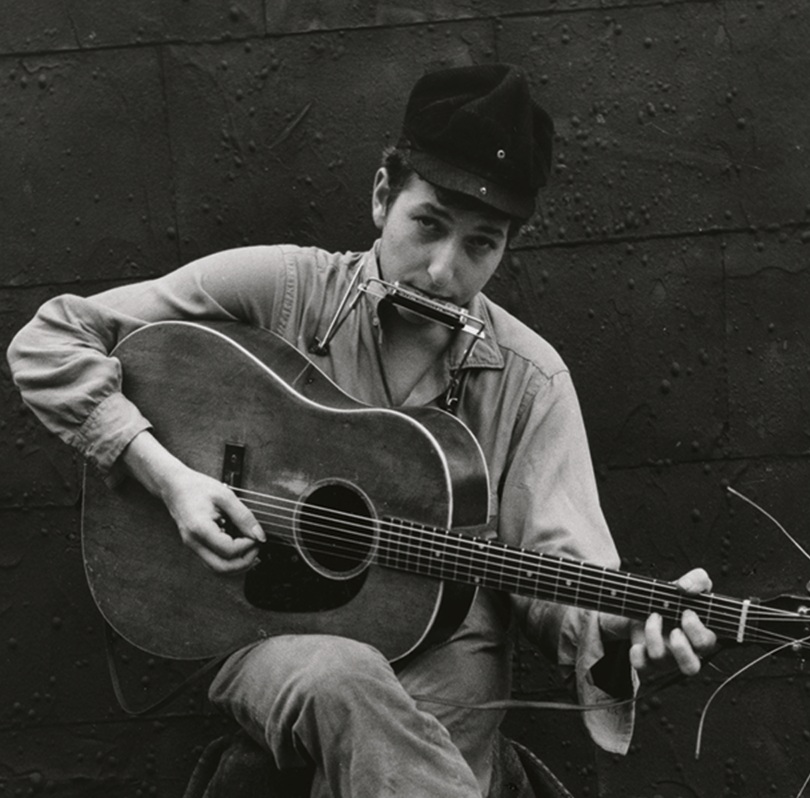
That he was light-hearted and free and only twenty, when he first took to the road, with ten dollars, a harmonica, and his guitar; that he saw Woody Guthrie signposting the way to go … and went, with little inclination to look back on old Duluth, dying in the moonlight.
That he enrolled early in that authentic, beaming and screaming college of real life, and never left it, because all he needed – all the diverse, sounds and colours of that authenticity – met him there and filled his spirit; that his America was always a place in which unwanted migrants moved across railway tracks and truck yards, seeking somewhere to remain.
That he was young when he left home – young and ready to change the world forever, if only he could elude the Rising Sun’s beckoning sirens; that he could look north to where the wind was blasting against the borderline, yet pluck from his heart the gentlest of chords … or walk, arm in arm, with his girl down the boulevard of broken dreams.
That he understood the essential difference between someone who sings and a real singer … how a song must possess him and keep him close to the trembling, naked world which summons songs into being; that the unfiltered sounds of all things flowed through him – all the discordant, muddy voices of the river that bore the slaves.
That he recounted in fearless detail the sad tale of Emmett Till: how he was butchered by a ghostly cohort of the white-robed Ku Klux Klan; that he thought long and hard about them, and about the senseless slaying of Hattie Carroll: how justice favours those who rule, rather than those whose small, arduous lives are shackled to their masters’ tables, until they die there – violently or otherwise.
That he saw death up close and chose to be the lonesome traveller whose life task was to unmask the truth, in a world where the truth kept dancing ahead, like some elusive tambourine player; that he sang in his own way, with a force that moved the world and asked big questions about being a man … what it means … and how to make each choice, and did it all so earnestly in that perfect voice.
[II] What can I say about Bob Dylan?
That he was one of the few who protested vociferously against the masters of war and fame and greed who reign on earth, yet never allowed protest to be his only idiom … never seized the easy option of allowing his life to become a single monotonous diatribe in which every answer to every dilemma is either black or white, for he had seen and known so much behind the shades.
That he blew great smoke rings for the mind, and journeyed deep into the heat of Harlem to ponder the ephemeral perceptions of a Spanish gipsy girl, swaying hypnotically to sounds from worlds beyond hers; that students in bedsits sat and listened to his records, and felt the first stirrings of their true selves, because he was the echo of a vast universe in which the times were changing, and the voiceless were beginning to be heard.
That he wore many caps and pillbox hats, but none he couldn’t easily balance on his head, or on a bottle of wine belonging to some Bradford millionaire; that he was the standard bearer – the high, lone-flier others had to aim at – the one who continually watched and listened as hooded hordes trudged mechanically back and forth over bridges leading to factories and groceries and little else.
That he was the song and dance man – the poet laureate of the people – who arrived when poetry had been hijacked by gold-star universities breaking faith with the innate music of the human heart; that he honed his craft in East Orange’s green pastures, where Rita-May and a few autodidactic free spirits were his most essential book of knowledge, in a universe going rapidly nowhere.
That he saw from the beginning how one who endeavours to be right for everybody, is wrong for the world, because the world needs to be challenged or it won’t wake up … it won’t be shaken from the siren comforts of its own sedation; that his voice was forever full of sounds never heard before him … those long and rolling songs of thunder … those long and bittersweet parables of a rolling stone.
That he was a chameleon, a shape-shifter and did it often to elude his trackers, who wanted him to remain static, or be more perfectly like them … with eyes to make a snake proud; that he changed his style from simple ballads to surreal visions, and was booed and jeered and called ‘Judas’, but played electrically on, watched by a laughing raven.
That he built word-pictures, layer by layer, and was the master of vagueness … the restless, elusive one, who never wished to be tied to one place, or one time, or just one woman – and yet, he offered sound directions about the best path home; he offered a clear road map for the wastelands of Desolation Row, where survival is a perpetual game of dice, and did it so pragmatically in that perfect voice.
[III] What can I say about Bob Dylan?
That he had his own apocalyptic motorcycle nightmare, on a slippery dawn stretch of Suicide Road, and afterwards shunned drink and drugs and stardom and became eternity’s simple pilgrim; that he worked obsessively for days paying sober tributes to his ‘sad-eyed Lady’, who seemed elusive and difficult to define, as Quinn the Eskimo kept his distance, and Louise put the ‘rain’ back in her pocket.
That he felt the rush of the streets and the solitude of the hills and forests, and no experience went unwanted, because everything he did enabled him to see distinctly the difference between paradise and the shimmering pleasure house across the road; that he thought twice about accepting accolades from pale-egg producing professors in the henhouse academies of poetry, where no product outlasts its ‘sell-by’ date.
That he wrote songs with music in them, songs with meter and rhythm and sharp-eyed images that would linger in your head, like some finely condensed film, or an old well-crafted poem you could actually call a poem; that highly trained singers sang notes from sheet music, and strove for perfect diction, but he was different: he preferred to weave his voice into the dramatic tapestries he created … he preferred to be believably tangled up in blue.
That he understood the call of the road and how the universe itself is a long pathway back to Eden … back to that first world which can’t be apprehended until the journey uncovers it for us; that his craft was shaped by an intuitive understanding of how the power of simplicity can bring timeless scenes to life: a few chords, a few suggestive phrases, and suddenly there’s a moon, a girl … and you can almost feel her!
That he was enlightened early about the way every small success makes a new and greater effort necessary in order for inspiration’s gods to smile one’s way again … to invoke some new vision of Johanna, or the Faerie Queen; that he was beset often by the urge to give up – to go home and live a quiet life in the arms of the girl from the Red River Shore, who, of course, had long ago departed.
That he was the jingle-jangle man, the master-puppeteer behind the white face and the tambourine and the many screens of himself … all so vividly alive and breathing; that he was the wonder boy, the burlesque Chaplin of Modern Times, who shuffled and danced and didn’t care too much for being modern, if there was nothing eternal in it.
That he lived and loved and moulded each experience into the sweetest or bitterest of sounds, and often placed them side by side on the same record; that his art encompassed not only the human heart’s bright visions of love and paradise, but visions also of deep, dark places where he never feared to go … places where vultures feed on death and desolation, and Noah is always the first to leave.
That he chronicled the whole flow of hope and horror from Kennedy to Covid, from Gandhi to Gallo – and then, for an encore, conjured a haunting tour-de-force about a strange wedding between a child and a prostitute in beautiful Key West; that he was always going back, always revisiting the sounds of things imbued with the magic to outlive their birthplace and their brief hour upon Time’s loom.
That he was with us from the day black people had no rights, to the day a white policeman was arraigned for applying the full weight of the law to the neck of a man helplessly gasping for air; that he was with us, and had his say, and brought equality and freedom a few steps closer, even though it isn’t time yet to rejoice, and he did it all so knowingly in that perfect voice.
Martin Mc Carthy is a contributing editor to the American poetry website, The HyperTexts. He lives in Cork City, Ireland, where he studied English at UCC and was awarded the H. Dip. in Education. His poems and essays have appeared in numerous print and online publications. He has published three poetry collections: Lockdown Diary (2020), Lockdown (2021), and The Perfect Voice (2023). A fourth collection, The Book of Desire, is currently awaiting publication. He was shortlisted for the Red Line Poetry Prize, and is a nominee for the 2023 Pushcart Prize. The Perfect Voice, his epic SoundCloud tribute to Bob Dylan can be heard here. A limited signed and numbered print edition can be purchased in the store at mccarthypoet.com
Here, is where I am, and where I’ve come to see you, while the light remains, and there is time enough to embrace it;
here, where the ebb tide leaves its mark on the breathless face of passion, and the day lays bare the trembling world before us;
here, where a blue wave burns its fingers on the shingle of a shore it can’t hold onto, and where you walk alone in December’s dark light;
here, where you ponder the graceful dexterity of limbs no longer clinging to the rainy edges of a mountain, and where the glow of youth has faded from your hair;
here, where you are mulling over the marvel of your marvelous body and its slow descent from heaven to this gold labyrinth that has stolen all your dreams;
here, where you live a life of rigid self-control, and are less dismissive now of those dizzying desires driving fireflies to their doom;
here, where you fear the spectre of some dark unending nothing, and where you strive sometimes to unfreeze that flowing world beneath your veil of ice;
here, where you are sitting among the rocks in your blue robe, and only two small buttons away from baring all;
here, where my heart is a wind wrapping itself around the dead heat from your marriage bed, and where everything will happen if you only give the word;
for here is where I am, and where I’ve come to meet you, while the light remains, and you are ready now to enflame it.
Martin Mc Carthy is a contributing editor to the American poetry website, The HyperTexts. He lives in Cork City, Ireland, where he studied English at UCC and was awarded the H. Dip. in Education. His poems and essays have appeared in numerous print and online publications. He has published three poetry collections: Lockdown Diary (2020), Lockdown (2021), and The Perfect Voice (2023). A fourth collection,The Book of Desire, is currently awaiting publication. He was shortlisted for the Red Line Poetry Prize, and is a nominee for the 2023 Pushcart Prize. The Perfect Voice, his epic SoundCloud tribute to Bob Dylan can be heard here. A limited signed and numbered print edition can be purchased in the store at mccarthypoet.com
“Write what you know” has always been good advice for poets, and for writers in general. It’s immediately evident when one begins reading The Perfect Voice, an epic poem of around thirteen pages by the talented Irish poet Martin Mc Carthy, that he knows his subject, Bob Dylan, both intimately and affectionately.
I find the title interesting and a bit ironic because I have been known to confess that I don’t care for Dylan’s singing voice. Amusingly, I believed for decades that “Knockin’ on Heaven’s Door” was Dylan’s best vocal, only to belatedly discover that John Cale sang the song for Pat Garrett & Billy the Kid, even though Dylan appeared in the movie. I suspect the producers may have agreed with me, and, who knows, perhaps even Dylan himself?
Then Axl Rose did a dynamite version for Guns N’ Roses and the case, in my opinion, is closed forever. Bob Dylan will never touch those vocals. Nor will most human beings with merely mortal vocal chords.
But in another sense – the sense of a Poet Laureate for the ages – Bob Dylan does have the perfect voice, or as near-perfect as is humanly possible. I agree with Paul Valery, who said poems are never finished, the poets just eventually give up. The trick, I say, is not to give up too soon.
In his best songs, Bob Dylan persevered long enough to deny any need for improvement.
I vividly remember visiting my uncle’s London apartment as a boy in the 1960s and hearing “Blowin’ in the Wind” playing on an old-timey portable radio positioned between potted plants on a rooftop garden on a rare sunny day. As a future peace activist and eventual author of a peace plan, I was mesmerized. At the risk of sounding corny, I will say the song touched my heart and my soul. And still does.
Other perfect or near-perfect songs by Bob Dylan, in my opinion, include “All Along the Watchtower,” “Tangled Up in Blue,” “Like a Rolling Stone” and “Lay, Lady, Lay.” Your favourites may differ, but the point is that we all have a favourite Bob Dylan song, and probably several, or more.
But I digress. Getting back to Martin Mc Carthy’s poetic tribute to Bob Dylan, I am reminded of a quote by another Irishman, Bono: “Every songwriter after him carries his baggage. This lowly Irish bard would proudly carry his baggage. Any day.”
One gets the feeling that Mc Carthy feels the same way. The poem is short enough and a quick-enough read for me not to want to give too much away in an intro. Let me say instead that Mc Carthy seems to channel Dylan in his tribute, and that you will know Dylan even better for having read it, as I do now.
That some strange, authentic light passed into him from blind bluesmen on corners, singing their stories of trains and chains and hope; blind bluesmen, miles from any college or guitar academy, with the wind at their backs, or their backs against some wall in East Texas, playing sublime bottleneck guitar with the necks of broken bottles.
That he was light-hearted and free and only twenty, when he first took to the road, with ten dollars, a harmonica, and his guitar; that he saw Woody Guthrie signposting the way to go … and went, with little inclination to look back on old Duluth, dying in the moonlight.
That he enrolled early in that authentic, beaming and screaming college of real life, and never left it, because all he needed – all the diverse, sounds and colours of that authenticity – met him there and filled his spirit; that his America was always a place in which unwanted migrants moved across railway tracks and truck yards, seeking somewhere to remain.
That he was young when he left home – young and ready to change the world forever, if only he could elude the Rising Sun’s beckoning sirens; that he could look north to where the wind was blasting against the borderline, yet pluck from his heart the gentlest of chords … or walk, arm in arm, with his girl down the boulevard of broken dreams.
That he understood the essential difference between someone who sings and a real singer … how a song must possess him and keep him close to the trembling, naked world which summons songs into being; that the unfiltered sounds of all things flowed through him – all the discordant, muddy voices of the river that bore the slaves.
That he recounted in fearless detail the sad tale of Emmett Till: how he was butchered by a ghostly cohort of the white-robed Ku Klux Klan; that he thought long and hard about them, and about the senseless slaying of Hattie Carroll: how justice favours those who rule, rather than those whose small, arduous lives are shackled to their masters’ tables, until they die there – violently or otherwise.
That he saw death up close and chose to be the lonesome traveller whose life task was to unmask the truth, in a world where the truth kept dancing ahead, like some elusive tambourine player; that he sang in his own way, with a force that moved the world and asked big questions about being a man … what it means … and how to make each choice, and did it all so earnestly in that perfect voice.
II What can I say about Bob Dylan?
That he was one of the few who protested vociferously against the masters of war and fame and greed who reign on earth, yet never allowed protest to be his only idiom … never seized the easy option of allowing his life to become a single monotonous diatribe in which every answer to every dilemma is either black or white, for he had seen and known so much behind the shades.
That he blew great smoke rings for the mind, and journeyed deep into the heat of Harlem to ponder the ephemeral perceptions of a Spanish gipsy girl, swaying hypnotically to sounds from worlds beyond hers; that students in bedsits sat and listened to his records, and felt the first stirrings of their true selves, because he was the echo of a vast universe in which the times were changing, and the voiceless were beginning to be heard.
That he wore many caps and pillbox hats, but none he couldn’t easily balance on his head, or on a bottle of wine belonging to some Bradford millionaire; that he was the standard bearer – the high, lone-flier others had to aim at – the one who continually watched and listened as hooded hordes trudged mechanically back and forth over bridges leading to factories and groceries and little else.
That he was the song and dance man – the poet laureate of the people – who arrived when poetry had been hijacked by gold-star universities breaking faith with the innate music of the human heart; that he honed his craft in East Orange’s green pastures, where Rita-May and a few autodidactic free spirits were his most essential book of knowledge, in a universe going rapidly nowhere.
That he saw from the beginning how one who endeavours to be right for everybody, is wrong for the world, because the world needs to be challenged or it won’t wake up … it won’t be shaken from the siren comforts of its own sedation; that his voice was forever full of sounds never heard before him … those long and rolling songs of thunder … those long and bittersweet parables of a rolling stone.
That he was a chameleon, a shape-shifter and did it often to elude his trackers, who wanted him to remain static, or be more perfectly like them … with eyes to make a snake proud; that he changed his style from simple ballads to surreal visions, and was booed and jeered and called ‘Judas’, but played electrically on, watched by a laughing raven.
That he built word-pictures, layer by layer, and was the master of vagueness … the restless, elusive one, who never wished to be tied to one place, or one time, or just one woman – and yet, he offered sound directions about the best path home; he offered a clear road map for the wastelands of Desolation Row, where survival is a perpetual game of dice, and did it so pragmatically in that perfect voice.
III What can I say about Bob Dylan?
That he had his own apocalyptic motorcycle nightmare, on a slippery dawn stretch of Suicide Road, and afterwards shunned drink and drugs and stardom and became eternity’s simple pilgrim; that he worked obsessively for days paying sober tributes to his ‘sad-eyed Lady’, who seemed elusive and difficult to define, as Quinn the Eskimo kept his distance, and Louise put the ‘rain’ back in her pocket.
That he felt the rush of the streets and the solitude of the hills and forests, and no experience went unwanted, because everything he did enabled him to see distinctly the difference between paradise and the shimmering pleasure house across the road; that he thought twice about accepting accolades from pale-egg producing professors in the henhouse academies of poetry, where no product outlasts its ‘sell-by’ date.
That he wrote songs with music in them, songs with meter and rhythm and sharp-eyed images that would linger in your head, like some finely condensed film, or an old well-crafted poem you could actually call a poem; that highly trained singers sang notes from sheet music, and strove for perfect diction, but he was different: he preferred to weave his voice into the dramatic tapestries he created … he preferred to be believably tangled up in blue.
That he understood the call of the road and how the universe itself is a long pathway back to Eden … back to that first world which can’t be apprehended until the journey uncovers it for us; that his craft was shaped by an intuitive understanding of how the power of simplicity can bring timeless scenes to life: a few chords, a few suggestive phrases, and suddenly there’s a moon, a girl … and you can almost feel her!
That he was enlightened early about the way every small success makes a new and greater effort necessary in order for inspiration’s gods to smile one’s way again … to invoke some new vision of Johanna, or the Faerie Queen; that he was beset often by the urge to give up – to go home and live a quiet life in the arms of the girl from the Red River Shore, who, of course, had long ago departed.
That he was the jingle-jangle man, the master-puppeteer behind the white face and the tambourine and the many screens of himself … all so vividly alive and breathing; that he was the wonder boy, the burlesque Chaplin of Modern Times, who shuffled and danced and didn’t care too much for being modern, if there was nothing eternal in it.
That he lived and loved and moulded each experience into the sweetest or bitterest of sounds, and often placed them side by side on the same record; that his art encompassed not only the human heart’s bright visions of love and paradise, but visions also of deep, dark places where he never feared to go … places where vultures feed on death and desolation, and Noah is always the first to leave.
That he chronicled the whole flow of hope and horror from Kennedy to Covid, from Gandhi to Gallo – and then, for an encore, conjured a haunting tour-de-force about a strange wedding between a child and a prostitute in beautiful Key West; that he was always going back, always revisiting the sounds of things imbued with the magic to outlive their birthplace and their brief hour upon Time’s loom.
That he was with us from the day black people had no rights, to the day a white policeman was arraigned for applying the full weight of the law to the neck of a man helplessly gasping for air; that he was with us, and had his say, and brought equality and freedom a few steps closer, even though it isn’t time yet to rejoice, and he did it all so knowingly in that perfect voice.
“I’m sure that I’ll learn from your poem, enjoying it the while, so thank you for sending it to me.” – Christopher Ricks –
Christopher Ricks is a British literary critic and scholar who currently teaches at Boston University. He speaks of Dylan as “the greatest living user of the English language”.
I love The Perfect Voice. It is really something. It opens beautifully, attributing Dylan’s uniqueness to an authentic light that passed into him from blind bluesmen on street corners. I love how it paints the picture that Dylan absorbed this raw, genuine expression of the human experience. That is really beautiful. I especially appreciate how the poem portrays him as someone who embraced the authenticity of real life, leaving behind his hometown and diving into a diverse, colourful world. I am relating to that right now with my situation. Also, congratulations on the display at the Bob Dylan Archive in Tulsa. Amazing! – Phil Conil. Strangelandic Music – from the Chained Mused Website
The Innovative Translations of Michael R. Burch by Martin Mc Carthy
Not much is known about the Greek poet Sappho, except that she was born around 630 B.C. on the island of Lesbos in the port city of Mytilene, and was apparently exiled to Sicily around 600 B.C. and may have continued to live there until her death around 570 B.C. She was also a musician, who played the lyre and was accomplished enough to set her own work to music.
In regard to that work, what survives of it is mostly Fragments, and this makes it particularly hard to translate, even in a word-for-word manner that might only give us a slight sense of who she really was. Yet, despite these major obstacles, Michael R. Burch’s innovative English translations bring her startlingly to life, both as a poet and as a woman who was modern, fearless, erotic, liberated, and way ahead of her time – as can be attested to by these fine Fragments from his small archive of substantial Sappho poems:
Fragment 16
Warriors on rearing chargers, columns of infantry, fleets of warships: some say these are the dark earth’s redeeming visions. But I say – the one I desire.
And this makes sense because she who so vastly surpassed all mortals in beauty – Helen – seduced by Aphrodite, led astray by desire, set sail for Troy, abandoning her celebrated husband, leaving her parents and child!
Her story reminds me of Anactoria, who has also departed, and whose lively dancing and lovely face I would rather see than all the horsemen and war-chariots of the Lydians, or all their infantry parading in flashing armor.
Fragment 47
Eros harrows my heart: wild winds whipping desolate mountains, uprooting oaks.
Fragment 58
Virgins, be zealous for the violet-scented Muses’ lovely gifts and those of the melodious lyre… by my once-supple skin sags now; my arthritic bones creak; my ravenblack hair’s turned white; my lighthearted heart’s grown heavy; my knees buckle; my feet, once fleet as fawns, fail the dance.
I often bemoan my fate … but what’s the use? Not to grow old is, of course, not an option. I am reminded of Tithonus, adored by Dawn with her arms full of roses, who, overwhelmed by love, carried him off beyond death’s dark dominion. Handsome for a day, but soon withered with age, he became an object of pity to his ageless wife.
Fragment 130
Eros the limb-shatterer, rattles me, an irresistible constrictor.
Fragment 156
She keeps her scents in a dressing case. And her sense? In some undiscoverable place.
Burch’s achievement here is no small thing, given that nearly all other versions of the same Fragments are flat and lifeless and overly prose-y, and offer no sense of Sappho’s living presence. A presence which, in Burch’s versions, is not only there, but seems to be imbued with an innate emotional intensity and musicality. And this, to me, is perfect, because Sappho was not only an accomplished musician – but she was also (as evidenced by some of her themes here) a passionate and uninhibited lesbian lover.
Indeed, most other translators of Sappho offer little more than literal translations of the surviving Fragments, and do not even aspire to meet the high standard that is expected of ‘great poetry’, despite grandiose claims – made invariably in their Introductions – that Sappho was ‘a great poet’.
One has to look no further than Anne Carson’s mildly acclaimed and relatively recent volume of translations, titled If Not, Winter: Fragments of Sappho, to see the vast difference between what Burch does, and what others do with the very same material. These are from Carson:
Fragment 16
Some men say an army of horse and some men say an army on foot and some men say an army of ships is the most beautiful thing on the black earth. But I say it is what you love.
Easy to make this understood by all. For she who overcame everyone in beauty (Helen) left her fine husband
behind and went sailing to Troy. Not for her children nor her dear parents had she a thought, no – ]led her astray
]for ]lightly] ]reminded me now of Anaktoria who is gone.
I would rather see her lovely step and the motion of light on her face than chariots of Lydian ranks of footsoldiers in arms.
]not possible to happen ]to pray for a share ] ] ] ] ] toward[
] ] ] out of the unexpected.
Fragment 47
Eros shook my mind like a mountain wind falling on oak trees
Fragment 58
] ] ] ] ]running away ]bitten ] ] you ]makes a way with the mouth ]beautiful gifts children ]song delighting clearsounding lyre ]all my skin old age already hair turned white after black ]knees do not carry ]like fawns ]but what could I do? ]not possible to become ]Dawn with arms of roses ]bringing to the ends of the earth ]yet seized ]wife ]imagines ]might bestow But I love delicately and this to me – the brilliance and beauty of the sun – desire has allotted.
Fragment 130
Eros the melter of limbs (now again) stirs me – sweetbitter unmanageable creature who steals in
Burch largely constructed his Fragment 156 out of just a few words by Sappho, and Carson has no matching Fragment for it, so I couldn’t include one. Yet this highlights even more their contrasting styles of translating. On the one hand, you have these Fragments by Carson that simply fail to show Sappho as the mesmerising poet she undoubtedly was – and on the other, you have Burch’s innovative reconstructions of what he often imagines those Fragments to have been, given what’s there and what’s known about them, and her.
Perhaps one needs to be a poet, and a really good one, to be able to bring another poet’s work vividly to life in another language, in another time, especially when so much of each poem is missing, and what remains are only hints and clues to what they were, and still could be, in the right hands – hands such as Burch’s, that are perhaps guided by an intuitive, sixth-sense knowledge of how to embody the art of another within a well-crafted and well-researched reimagining, in order to make it live again in some of its original glory.
Burch says: “I started translating poems because I was unhappy and frustrated with the translations I found. So many of them seemed prose-y, awkward, not really poetry. I had never dreamt of attempting a translation myself, because I had a smattering of French and German, and I had forgotten more than I remembered. But I fell in love with ‘Wulf and Eadwacer’ and thought it was a shame that translations seemed so lacking. I thought to myself, ‘I’m good at research, so why don’t I research the words and phrases, try to grok the poet and the poem, and see what I can do?’ My first attempt seemed better to me than all the translations I had read, so I decided to attempt my own translations of other poems I liked. I kept surprising myself with my favorite non-English poets: Basho, Issa, Sappho, Rilke, et al. So I kept doing the same thing, and I thought it would be a favor to the poets, their poems, and to the readers, to have better translations.”
This statement by Burch is only a spontaneous, off-the-cuff reply to a question regarding his motivation for translating poetry in general, but there is, nevertheless, a whole lot in it for other translators to reflect upon, if they aspire to do their work well, and to serve the Muse with equal distinction. So let’s pause here a moment and savour three more of Burch’s sumptuous Sappho translations:
Fragment 22
The enticing girl’s clinging dresses leave me trembling, overcome with happiness, as once, when I saw the Goddess in my prayers eclipsing Cyprus.
Fragment 55
Lady, soon you’ll lie dead, disregarded, as your worm-eaten corpse like your memory fades: for those who never gathered the roses of Pieria must mutely assume their places among the obscure, uncelebrated Hadean shades
Fragment 155
A short revealing frock? It’s just my luck your lips were meant to mock!
Now it remains only for me to say that I firmly believe Sappho herself is there somewhere, smiling her approval on what Burch has done to endow her Fragments with many of the striking qualities they originally possessed. And that time will, in due course, judge this to be a truly magnificent achievement.
Work Cited: Carson, A. If Not, Winter. Great Britain: Virago Press, 2003.
Michael R. Burch’s translations are taken by permission from his archive of Sappho translations, and can be found at: www.thehypertexts.com
Martin Mc Carthy lives in Cork City, Ireland, and spent several years working for the Defence Forces, before studying English at UCC and becoming a secondary school teacher. His poems and essays have appeared in numerous print and online publications, and he has published two poetry collections: Lockdown Diary (2020) and Lockdown (2021). He was shortlisted for the Red Line Poetry Prize, and was a nominee for the 2022 Pushcart Prize. At present he is completing a long sequence of love poems, titled Book of Desire. His website is: mccarthypoet.com
This essay was published in The Chained Muse on 14/03/2023, drawing a record number of comments from the readership.
Top Comment from Patrick McIntyre
I have never found Sappho compelling … until now. Mr Burch’s translations are a revelation. I feel exactly like Keats upon his reading Chapman’s translation of Homer, “Then felt I like I some watcher of the skies, When a new planet swims into his ken;”
Thank you for making my day Mr . McCarthy for introducing me to these marvelous translations! Finally, I feel I have had a glimpse into the spirit of Sappho’s genius.
Southword 43, Launch Event, 2nd February in Waterstones, Cork
The launch of Southword 43 will take place in Waterstones, Cork, at 7.00 p.m. on Thursday 2nd February, with poetry and short story readings from issue 42 and 43 of Southword. We hope you’ll join us!
With Patrick Cotter, Artistic Director, Munster Literature Centre, Cork.
Poems from Amy Woolard, Fran Lock, Róisín Leggett Bohan, Daragh Byrne, Kevin Cahill & Martin Mc Carthy. €10.00 · In stock.
Martin Mc Carthy’s poem is titled ‘Before the Onslaught’.
Before the Onslaught
It’s a squally September morning and on the pavement outside my window, a blonde woman and a blonde girl – presumably her daughter – are strolling steadily towards the schoolhouse.
Both are dressed in pink, and the girl has a matching satchel with an image of My Little Pony, which explains to some degree her own neat ponytail.
At the corner, near the traffic lights, there’s a shop with a sheltering canopy, and they stop there, for the mother to button the girl’s small jacket against a slowly gathering onslaught.
Yet neither seem to be in a hurry to hurry into the rain, or into the rest of their lives – where, already, a small scattering of cherry leaves lies trampled in a nearby puddle.
It was my honour to edit Martin Mc Carthy’s TheBook of Desire. While working with him, I got to know Martin as a gentleman, a scholar and an exemplary human being, as well as a poet. This is a book of poetry, so that will be my focus. Still, it doesn’t hurt to know that poets don’t have to invariably be oddballs and cretins!
TheBook of Desire is not your run-of-the-mill modern poetry book. All too often modern poetry attempts to avoid praise, and love poetry is a form of praise. Hell, desire itself is a form of praise, if we think about it. With desire we find someone else so attractive as to be irresistible. We praise that special someone with our eyes, with our longing looks, with the reactions of our bodies, and if we are poets not overcome by inhibitions, we praise them with our poems as well.
So why do modern poets, almost by consensus, avoid praise? I think it’s akin to schoolchildren being afraid to wear something that will get them ridiculed: bell bottoms too skinny in the sixties or too flared later, for example.
Poems of praise, poems of love and poems of desire should not be treated like fashion trends, but somehow that’s what happened. Modern poets concluded that things like sentiment, emotionalism and praise were ‘bad’ and would get them ridiculed by their peers, so they copped out. Not all poets, but the majority.
And yet we human beings are sentimental creatures, we’re emotional creatures, and we like to praise and be praised. Is any of that bad?
I consider myself an exception to the modern poetic rule. Both my published books are books of love poems. One editor told me that she considered me the best contemporary writer of love poems. Another editor modified my bio to say my poems ‘burned on the page’. More than a few readers have said similar things over the years. But, alas, I now have competition in a certain Martin Mc Carthy! But I do have a head start on him, so hopefully it will be like the tortoise and the hare. In any case, the two of us are in a smallish minority, writing poems about love and desire in the 21st century.
I find Martin’s poetry unique and refreshing for the following reasons:
First, love poetry requires honesty that goes beyond mere flattery. What I see immediately in ‘Nymph’, the TheBook of Desire’s opening poem, is such honesty when Martin admits that he’s like a moth drawn to flame, powerless to resist. Just the sight of a girl’s bare arms is enough to incite desire.
Second, poets have to be able to communicate both what they’re thinking and what they’re feeling. That’s far easier said than done, or all the world’s bad and mediocre poets would be great. A poet needs the gift of words, and we see that in the book’s second poem, ‘The Sea Beats in You’. It is here that Martin reveals himself as a mystic. Some of my favourite poets were mystics: William Blake, Emily Dickinson, Rumi, Sappho, Walt Whitman. The mystics see connections between themselves and the universe that ‘normal’ people don’t. In this splendid poem Martin, his lover, the sea and the moon are all connected, all part of something larger and endlessly mysterious.
I also like the continuity of Martin’s poems in The Book of Desire. The idea of what might be called ‘interconnections within vastness’ is a recurring theme. In many modern poetry collections we have one disconnected idea after another. But here we have poems building toward T. S. Eliot’s ‘overwhelming question’. What are the roles of love and desire in the universe we occupy, so temporarily?
Of course there is no absolute answer. But Martin shows us how it is possible to navigate the ebbing and flowing waters of desire while embracing the Great Mysteries that surround us.
I could go on, because there is so much to like and recommend, but I don’t want to delay you from reading the poems any longer! The Book of Desire is a book well worth diving into.
We had a life, we had a big life one time, not so long ago; now, we only have each other, and this house, this food, this television, and this bed where we still sleep together.
Hopefully, when we go, we’ll leave on the same day, at the same hour, after a large glass or two of Crested whiskey, because Covid is near, and little else.
Covid is near, and no old friend drops by; no young child runs boldly into our arms, to dispel the bleakness, the perpetual emptiness, with a sudden rush of joy.
Covid is near – and the TV is on, and the kettle is on, and the heating is on, and the presses are full, and this is it: our whole, old world radically reduced to details.
Reading through the poems, I was taken with the searing honesty in the tone. In ‘Cocooning’ by Martin Mc Carthy, we hear the fear, the realisation of mortality and the bleak loneliness that older people, indeed everyone, felt at some time during the year.
Cllr. Gillian Coughlan, Mayor of the County of Cork. ( From her Introduction to Cork City Council’s covid anthology, Poems from My 5K. )





 MARTIN MC CARTHY POET